
Overview
iDigBio is an Other Associate Participant Node and Data Publisher within the GBIF Network. Our focus is on specimen-based biodiversity collections from U.S. institutions. As a GBIF Node, iDigBio provides:
- Support for science and research
- Support for policy and decisions
- Community engagement and capacity building
- Technical services for biodiversity data mobilization and management
Mission
The mission of the iDigBio Node is to promote and catalyze digitization, mobilization, and use of data about biodiversity specimens through community capacity building, open data, and innovative uses of these data.
Vision
We envision a world in which digitized biodiversity and extended specimen data underpin research, policy, and economic decision-making.
History
An estimated 1.8 million named species of organisms exist on Earth today and many more are now extinct. This rich diversity is documented through research collections of fossil and extant organisms housed in natural history museums, universities, field facilities, botanical gardens, state surveys, and other institutions maintaining collection facilities. These vouchered collections provide validation for species names and identifications along with a wealth of ancillary data such as DNA sequences, field notes, stratigraphic position, environment/habitat information, time of collection, audio recordings, and the condition of the specimen at the time of collection. Paleontological collections provide time of existence, evolutionary history, proxy data, and past distribution information in space and time.
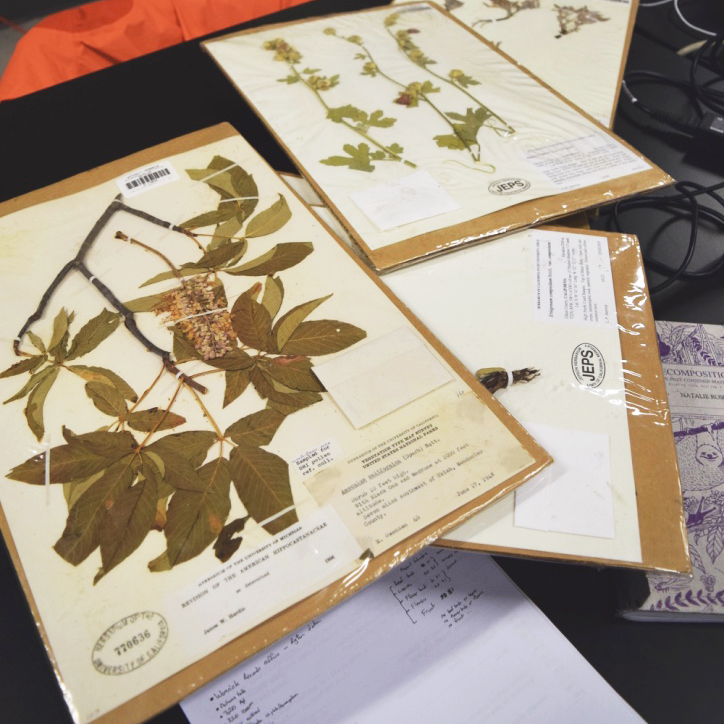
Herbarium sheets from UC Berkeley’s Jepson Herbarium by Joanna McCaffrey (licensed under CC BY-NC 4.0).
Collections data reveal gaps in our knowledge of biodiversity and provide the baseline from which to continue biodiversity studies. Filling these gaps is crucial to a complete understanding of the biodiversity of the planet, both in space and time. Specimens and their associated data allow us to reconstruct the history of climate and tectonic plate changes as reflected in a validated record of life on earth. Having this baseline information allows efficiency of effort in biodiversity exploration. Gaps in specimen collections and associated natural history data can be used to strategically target further research and field exploration. The effort to digitize, image, and provide online accessibility to these data is critical for understanding biological knowledge in space and time, and underpins how we address contemporary scientific and societal issues, including planetary biogeography and climate change.
Knowledge of the planet’s biodiversity documented in vouchered scientific collections represents an area of exploration and discovery carried out over the entire course of scientific history, yet the extent of life on earth is still not known definitively. New efforts and approaches to understanding biodiversity and advancing our knowledge are represented by several U.S. National Science Foundation (NSF) programs (e.g., Dimensions of Biodiversity, Systematics and Biodiversity Science, Sedimentary Geology and Paleobiology). However, there is a digitization bottleneck that effectively limits access to information residing in the various existing vouchered collections across the U.S. and the world. It is estimated that U.S. collections contain one billion specimens, but only 10% of these are accessible online. As a consequence, the critical information in the physical collections is underutilized, the usefulness of scientific collections data in research remains limited, and the importance of the collections is not appreciated.
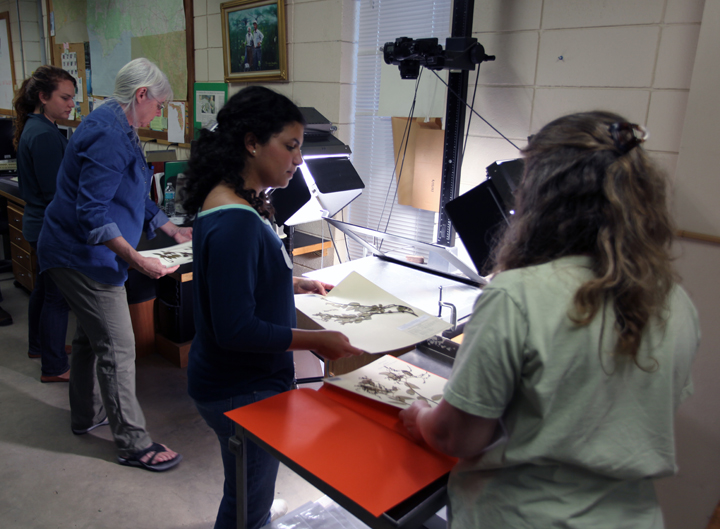
Permanent imaging station in a museum collection by Austin Mast (licensed under CC BY-NC 4.0).
In 2008-2009, the Interagency Working Group on Scientific Collections (IWGSC) developed a comprehensive report on the current status of federally owned collections, and the U.S. National Science Foundation, as part of that working group, surveyed federally supported collections and published a summary of the findings. Both reports emphasized the importance of leveraging past investments by digitizing collections and making them available and searchable online to researchers worldwide.
Responding to concerns expressed in these reports, members of the biological and paleontological collections community developed a ten-year strategic plan to digitize, image and mobilize biodiversity collections data and followed this strategy with an implementation plan for accomplishing the goal that depends upon a number of stakeholder activities. The goal of the digitization effort was “to produce a resource of lasting value for answering major research questions.” The plan stated the following key objectives: “digitize data from all U.S. biological collections, large and small, and integrate these in a web accessible interface using shared standards and formats, develop new web interfaces, visualization and analysis tools, data mining, georeferencing processes and make all available for using and improving the collections resource, create real-time upgrades of biological data and prevent the future occurrence of non-accessible collection data through the use of tools, training, and infrastructure.” In response, the U.S. National Science Foundation developed and issued a soliciation for the Advancing Digitization of Biodiversity Collections (ADBC) program that provided seed funding to begin the national digitization effort over the decade from 2011-2021 (note that the program was limited in scope and was not designed to address every item within the strategic and implementation plans).
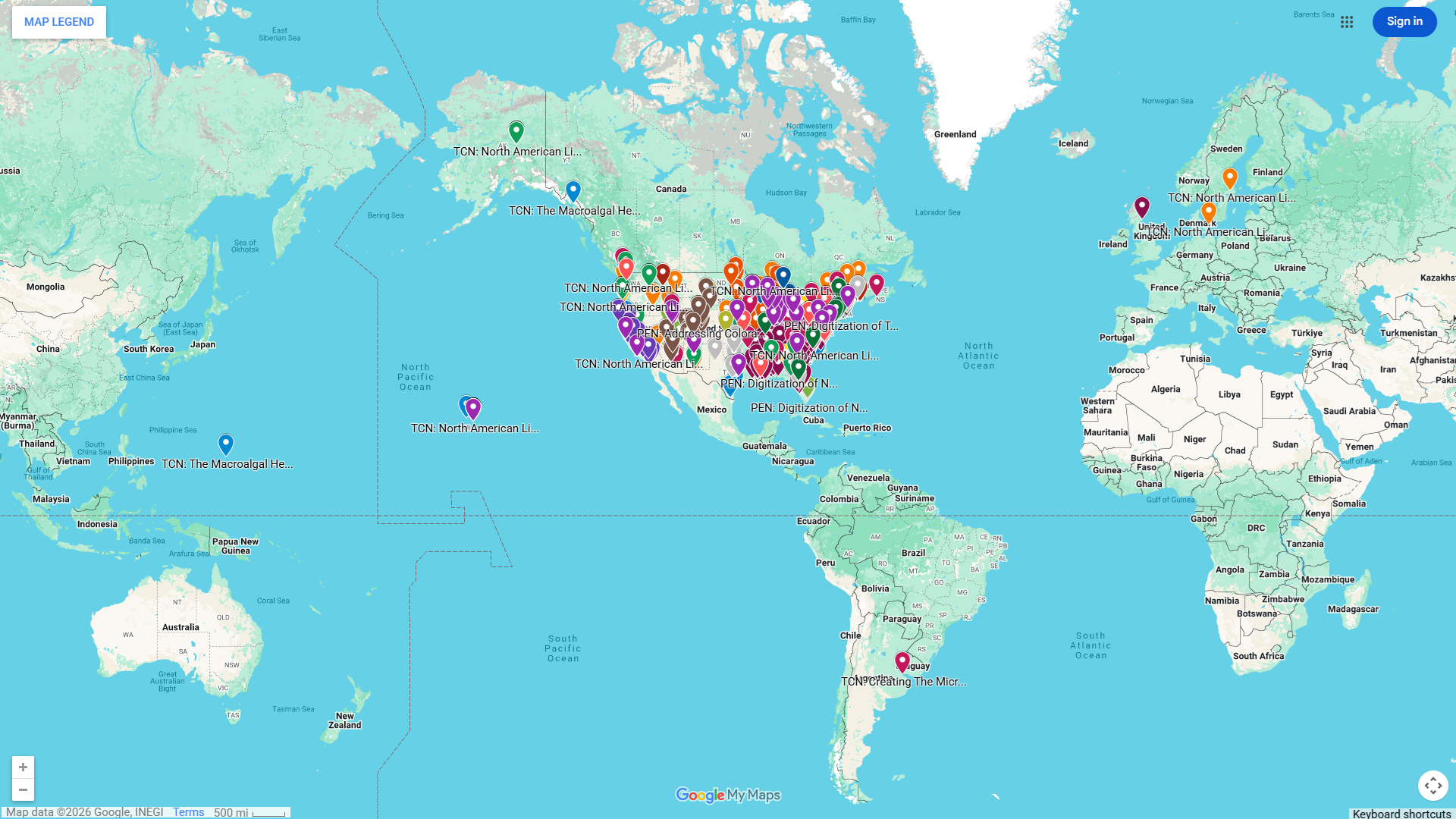
Map of institutions collaborating in NSF’s ADBC program by iDigBio Staff (licensed under CC BY-NC 4.0).
iDigBio, or Integrated Digitized Biocollections, was initially funded in 2011 as part of the ADBC program to serve as the national coordinating center for the digitization effort. iDigBio was charged with being the administrative home for the national digitization effort, fostering partnerships and innovations, facilitating best practice recommendations and workflows, and establishing integration and interconnectivity among the collection digitization projects, including Thematic Collections Networks (TCNs) and Partners to Existing Networks (PENs). The goal of accessibility of these long-term data resources was to provide opportunities for fostering new and innovative research on biodiversity issues. Over its life cycle, the iDigBio project achieved its goals through partnerships with the University of Florida’s Florida Museum, Florida State University, Arizona State University, and the University of Kansas with funding provided by the U.S. National Science Foundation: DBI-1115210 (2011-2018), DBI-1547229 (2016-2022), and DBI-2027654 (2021-2027).
Although iDigBio’s funding will end in 2027, the community resources and data mobilized have been preserved through a variety of mechanisms, including:
- This website as iDigBio’s new home,
- An archive of iDigBio’s legacy website and wiki,
- the Biodiversity specimen data mobilized to and available in GBIF.
- and Migration of all content and user accounts from the legacy iDigBio IPT to the GBIF U.S. IPT.